
IN GEORGIA’S KITCHEN
Abiquiu, New Mexico, home to Georgia O'Keeffe takes center stage this week. As always, your readership and support simply blows me away.

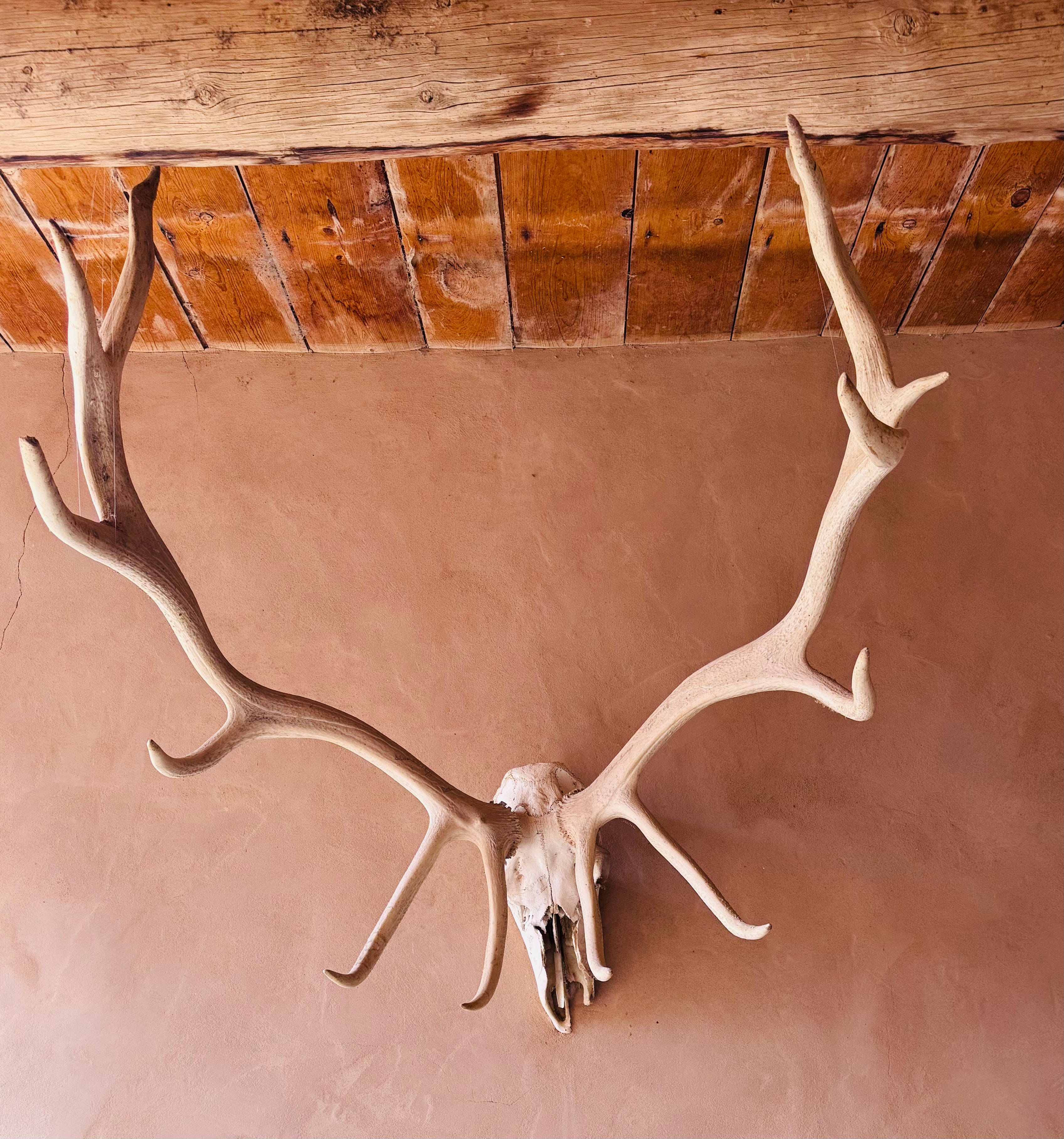
Recently, I spent a day in Abiquiu, New Mexico. My writing mentor, Jeannine Oulette and her husband Jon passed through New Mexico before returning home to Minnesota. At the top of our must-do list was a visit to Ghost Ranch followed by a tour of Georgia O’Keeffe’s Home and Studio.
Abiquiu, a small village located an hour north of Santa Fe, is pronounced ab-i-q. It means chokecherry tree path in a mash up of native Tewa and Spanish, a testament to its longevity.
Before it became famous for Ghost Ranch and Georgia O’Keeffe’s home, Abiquiu was inhabited for centuries by the Puebloan people. During the mid-1700s Spanish colonists captured and then enslaved members from the Apache, Comanche, Navajo, Pawnee, and Ute tribes. They were forced to learn Spanish, convert to Catholicism, work as servants and field hands. Some were trained as soldiers to protect the Spanish settlements.
True confession. I am mildly obsessed with Miss O’Keeffe. I almost always have a box of notecards of her paintings at the ready whenever I need to send a thank you note or a belated birthday card. Last December, after a visit to the O’Keeffe Museum in Santa Fe, I bought a new apron from the gift shop. It’s a lot like the one she’s wearing in this photo on the cover of A Painter’s Kitchen written by Margaret Wood.
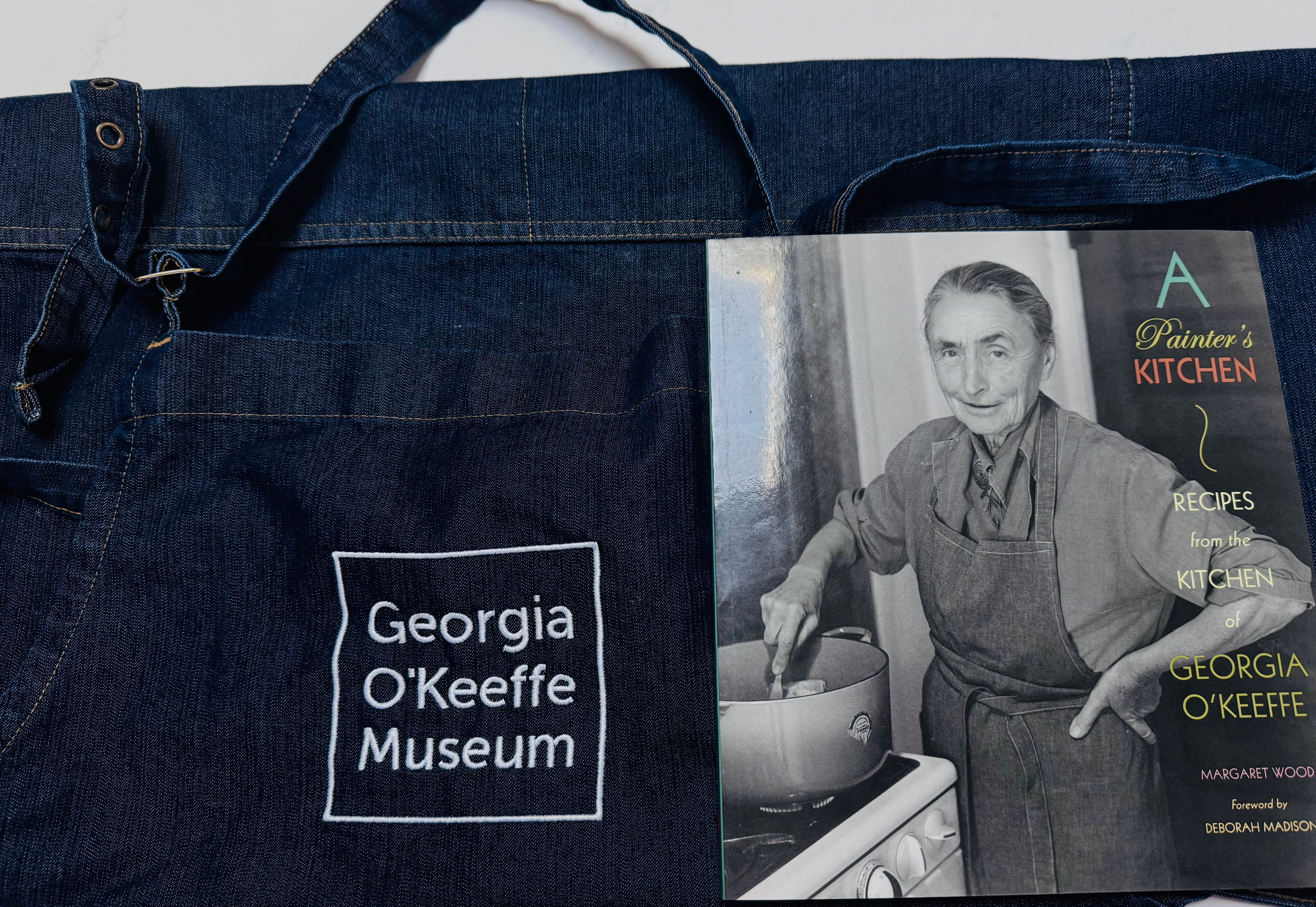
Margaret Wood worked as Miss O’Keeeffe’s cook and companion from 1977-1982. She was just twenty-four when they were introduced through a friend, a former paid companion to Miss O’Keeffe. Wood had just graduated from Hastings College in Nebraska with a degree in art education. Now in her seventies, Margaret Wood lives in Santa Fe
I’ve had this cookbook for some time now. Many of the recipes are so simple, so spare, especially in the vegetables chapter, I hardly remember to reach for this cookbook when I’m contemplating what to make for dinner. Rather, this cookbook provides inspiration about the how of preparing food. I often find myself thinking ‘How would Georgia (because in my imagination we’re on a first name basis) go about preparing dinner or breakfast even if she didn’t know what to cook?’
This book sits on my bookcase, its cover facing outwards so that every time I walk past the shelf I’m able to see this photograph. Doesn’t Miss O’Keeffe look like she’s in command, having the time of her life while she’s stirring the pot?
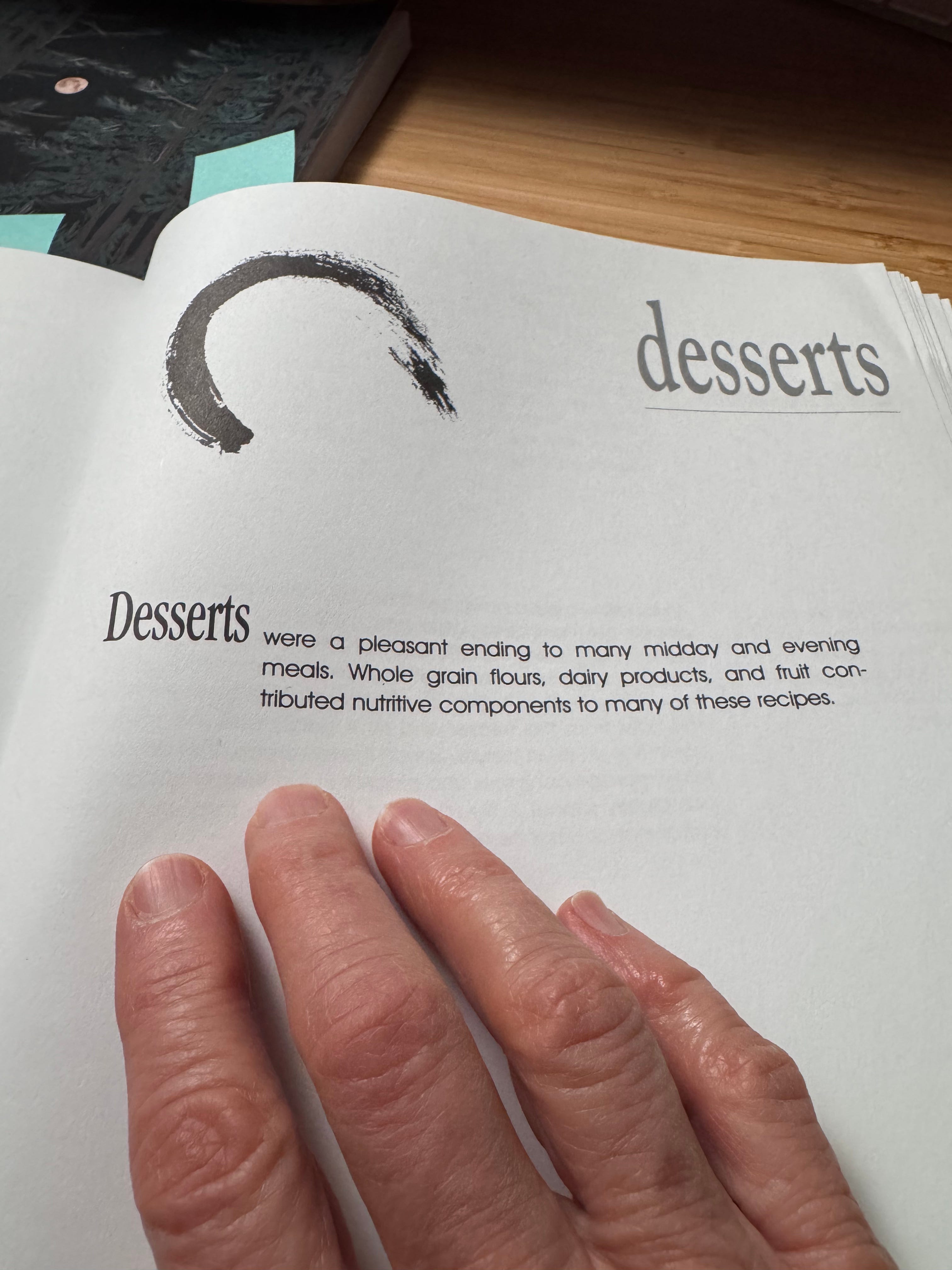
The beginning of each chapter is accompanied by a graphic drawing. My favorite is this one from the desserts chapter:
Most recipes are preceded by a snippet of remembrance by Margaret Wood, giving us a glimpse into O’Keeffe’s routines, what she wore on her daily walks, what was growing in the garden, who she bought her eggs from. This one, says it all:
“Miss O’Keeffe’s favorite foods were often simple, almost austere, like many of the forms she painted. She once advised me about the designs for my weavings. She admired the lines in Japanese and Chinese calligraphy and referred to them when she told me to create “lines that speak” in my designs.”
After touring Miss O’Keeffe’s home and studio a couple of weeks ago I can’t wait to go back. Walking through her house and garden was galvanizing. Miss O’Keeffe’s intentionality about her art, her choices about what to paint and what to omit carried over into her everyday life. You can see it in her wardrobe, white dresses in summer, black during winter. The living room with built in bancos, benches, that take advantage of the garden view flank a Saarinen marble coffee table. A Noguchi lantern above the dining room table installed on a pulley is the only non-natural light source for the room.
My favorite room, rooms actually, were the kitchen and pantry. Standing in this part of the house created an intimacy I don’t always feel when admiring her paintings. The paintings are nothing short of grand. They take my breath away. Her masterful use of light, shadow, and color bend, compress, then deepen the subject matter, especially the landscape paintings.


The pantry and kitchen are grand and admirable in a more approachable way. They are as she left them before Miss O’Keeffe moved to Santa Fe in 1984 to be in proximity to medical care. Whitewashed plywood shelves hold multiple Chemex carafes and tea pots. Pickling crocks that sit on the floor contrast with colorful Le Creuset enamel cookware in shades of red and yellow. Saved cookie tins stack next to oodles of mason jars used for canning summer vegetables and fruits. It’s well organized, hardly cluttered. But the number of multiple items and breadth of specialized kitchen tools like the Procter-Silex Juicit juicer and Electromatic Thermo-Cult yogurt incubators tell a story of a person intent on feeding herself, and others, well.
The pantry in particular is a study in contrast to her paintings whose abstract forms intentionally simplified the subject matter she painted.
Margaret Wood’s description of the pantry follows:
“Through a swinging door to the east was a dark room lit by one small window that served as the pantry. Along each wall were rows of shelves filled with jars of canned and dried garden produce, a few commercially canned items, spices, and grains. The refrigerator was in this room; a large freezer was kept in a separate entryway. The flour mill and grains were along the north wall. Pots and pans were hung on nails against another wall. Mixing bowls, the blender, various graters, whisks, and beaters were along an adjacent wall. At times, bundles of herbs hung from the vigas. There was a near impeccable order in which everything was kept. This rather dark room seemed to exude a sort of magic from the variety of colors and shapes in all the glass jars.”
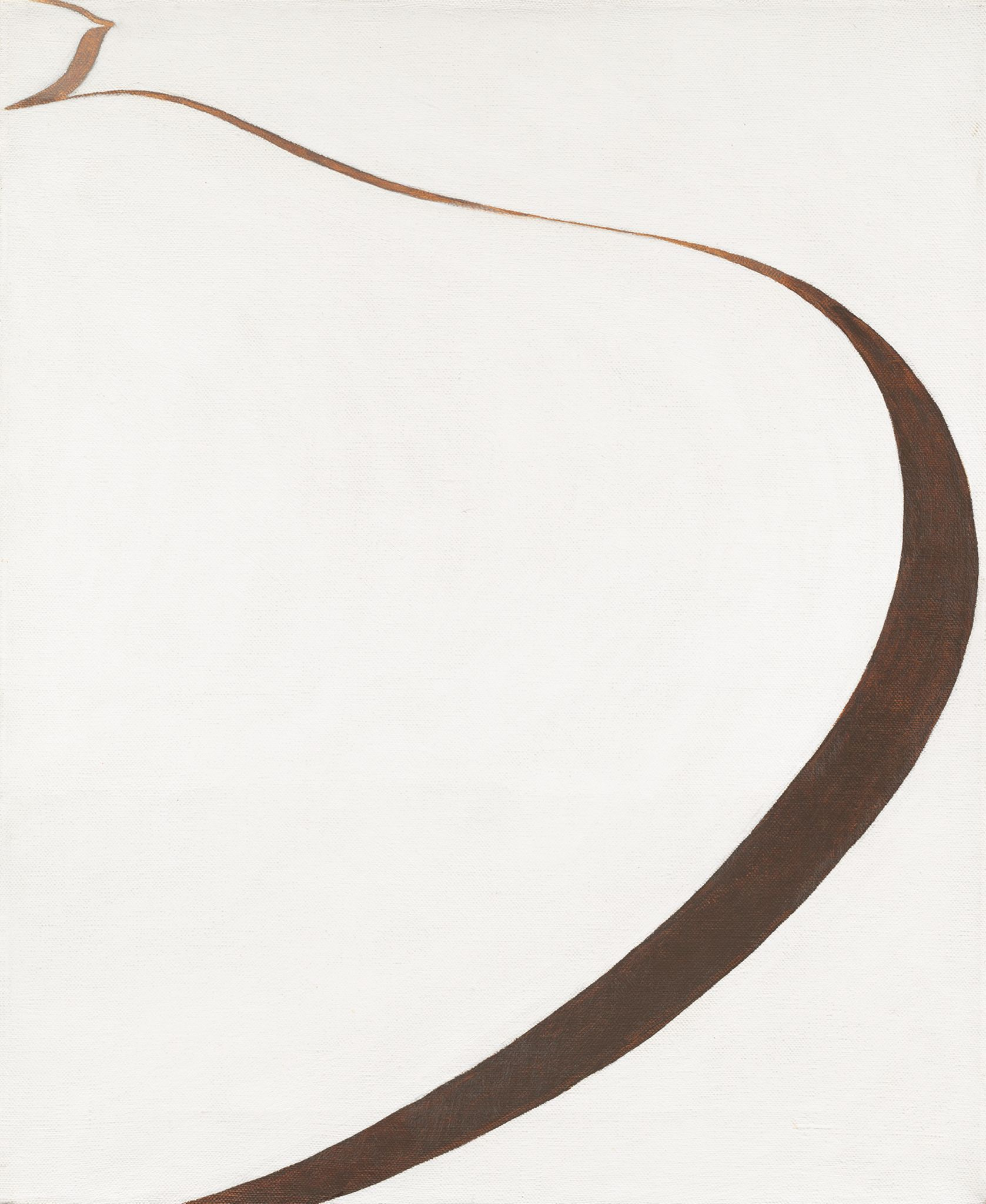
The paintings inspire awe, forcing us to see ordinary things in a not so ordinary way. Just look at this painting entitled Winter Road. Inspired by the view of the road from her bedroom window after a snowstorm, it is simply a masterful modernist interpretation of line and movement.
In the spirit of how-ness I’ve been using up some sourdough discard the past couple of weeks by making cottage cheese pancakes and raisin scones. They’re both yummy, as delicious and simple as they look.


Cliché as it may sound, Miss O’Keeffe’s greatest gift as an artist may be the blueprint she left behind for understanding the how of living an extraordinary life.
Love this, Suzanne!
Imagine having an open pantry like Georgia's--good thing my cupboards have doors! Such an interesting post Suzanne. So good you got to spend time with Jeannine & Jon, and of course Lisa.